Diesel-RK is an engine simulation tool
DIESEL-RK is a full cycle thermodynamic engine simulation
software. One is designed for simulating and optimizing working processes of
two- and four-stroke internal combustion engines with all types of
boosting. The program can be used for modeling the following types of engines:
- DI Diesel engines, including PCCI and engines fueled by bio-fuels.
- SI petrol engines.
- SI gas engines including prechamber systems, and engines fueled by
different gases: Methane, Propane-Buthane, Biogas, Wood gas, Syngas, etc.
- Two-stroke engines with uniflow and loop scavenging, opposed piston
engines (OP or Junkers engines) and OPOC engines.
- Dual fuel engines (engines having few independent fuel injection systems for different fuels).
(Engines with RCCI)
The DIESEL-RK is a thermodynamic tool: engine cylinders are
considered as open thermodynamic systems.
Representative applications include:
- Fuel consumption prediction and optimization.
- Torque curve and other engine performances predictions.
- Combustion and emission analysis, including PCCI / HCCI.
- Dual fuel engine mixture formation and combustion analysis.
- Knock prediction.
- Valve timing optimization, including VVA optimization for every operating
mode.
- EGR analysis and optimization.
- Turbocharger and bypasses matching and optimization.
- Conversion of diesel engines into gas engines.
- Cooperation with different modeling tools: Simulink, IOSO NM, etc.:
DIESEL-RK solver can be run under the control of other applications.
Main features of program DIESEL-RK are similar to known
programs: WAVE (Ricardo Software), GT-Power
(Gamma Technologies) and BOOST (AVL). However, together with conventional abilities, the
program DIESEL-RK has new advanced features:
- RK-model : is
a multi-zone diesel fuel spray mixture formation and combustion model.
- Fuel Spray Visualization tool (easy flat and advanced 3D).
- Multiparametric and multidimensional optimization of engines parameters. A
target function including NOx, Soot and SFC simultaneously may be calculated
as inside DIESEL-RK, as with User Defined procedure being done as DLL and
linked with DIESEL-RK kernel.
- 1D and 2D parametrical researches procedures.
- Detail Kinetic Mechanism of NO formation (199 reactions, 33 species) is
implemented for PCCI, multiply injection and high EGR analysis. (Zeldovich
mechanism does not work correctly at large EGR and multiple injection. One
shows too small emission in comparison with experimental data.)
- DIESEL-RK support simulation of water injection and
account H2O condensation and evaporation in intake manifold, port and
cylinder.
RK-model simulates mixture
formation and combustion taking into account:
- Piston Bowl Shape: any geometrical shapes can be specified and saved into
the piston bowl data base which already includes the most common geometries;
- Different Swirl Profiles and swirl intensity;
- Sprayer Location: central, non-central, side injection, few
sprayers;
- Number, Diameter and Direction of sprayer nozzles (each
sprayer may have nozzles with different diameters and arbitrary orientation);
- Fuel Properties, including bio-fuels and blends of bio-fuels with diesel
oil (data base of fuels is supported);
- Shape of injection profile including multiple injection and PCCI;
Optimization of injection profile flanks shape; Optimization of Multiple
Injection Strategy;
- Detail Chemistry is calculated at the Ignition Delay prediction for PCCI
with diesel fuel and biofuel. RK-model accounts a CR high pressure effect on Ignition
Delay;
- Low Temperature Combustion is modeled at PCCI and HCCI;
- Interaction of the Sprays with Walls and with other Neighboring Sprays
(as on wall, as in volume);
- Local Temperature of the wall in the region of impingement the sprays with
a wall.
The RK-model has a capability to optimize the piston bowl shape and fuel
injection system parameters (sprays directions, diameter and number of nozzles)
as well as to develop multiple injection strategy and the Common Rail
controlling algorithm over the whole operating range.
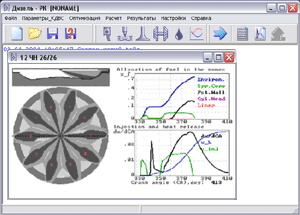
| Fuel spray evolution visualization tool
The DIESEL-RK includes "Fuel Spray Visualization" code.
This code allows engineers to present in the animation picture format the
results of modeling of interaction of the fuel spray with combustion chamber
walls, air swirl and with neighboring sprays. The code assists in choosing
the best shape of the piston bowl and select the diameter, the number and
the directions of injector nozzles for a given injection duration and swirl
intensity. Results of simulation can be saved as Windows graphic files, AVI
or animated GIF files. Visualization is possible as flat picture, as in 3D.
|
 |
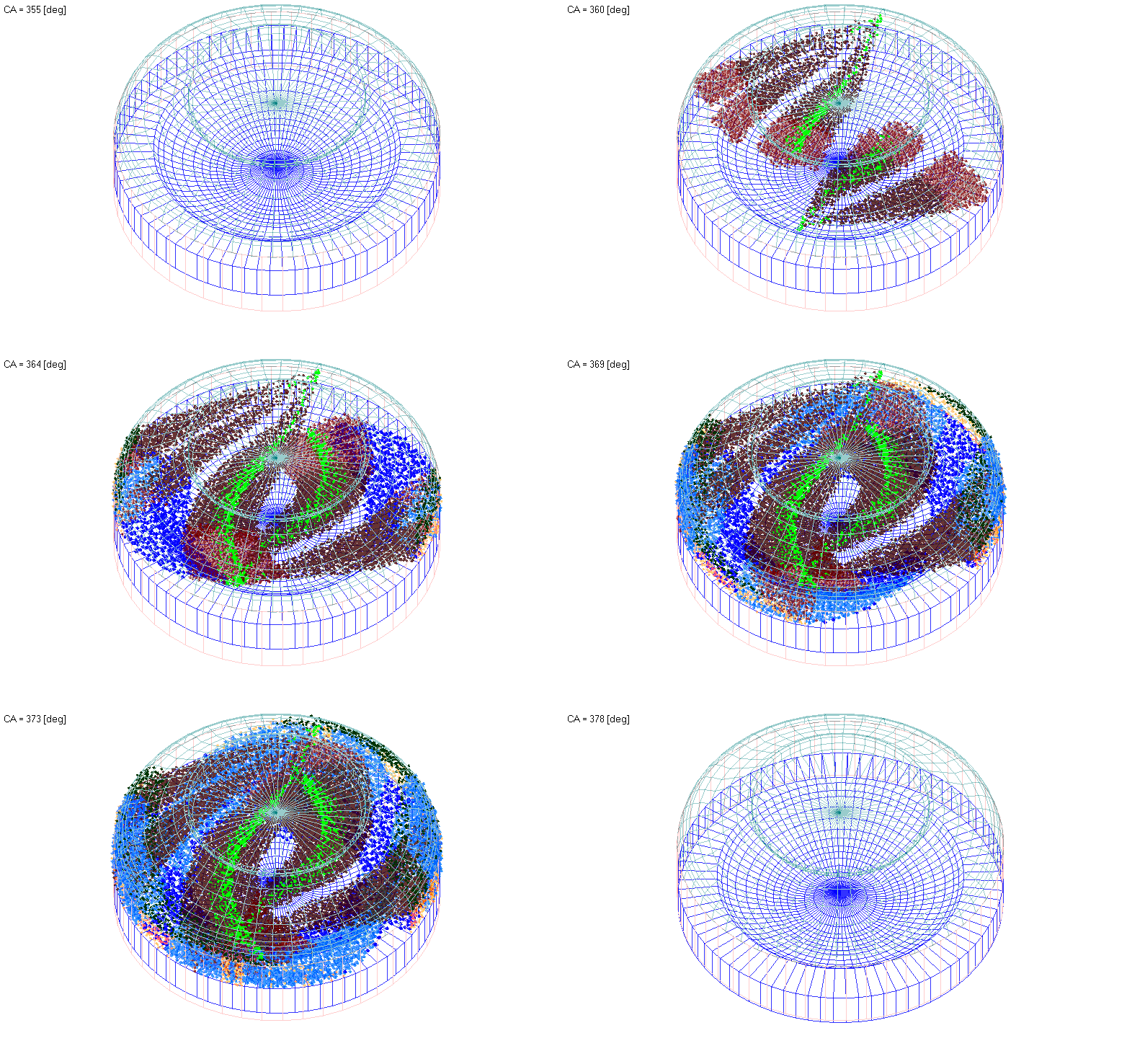
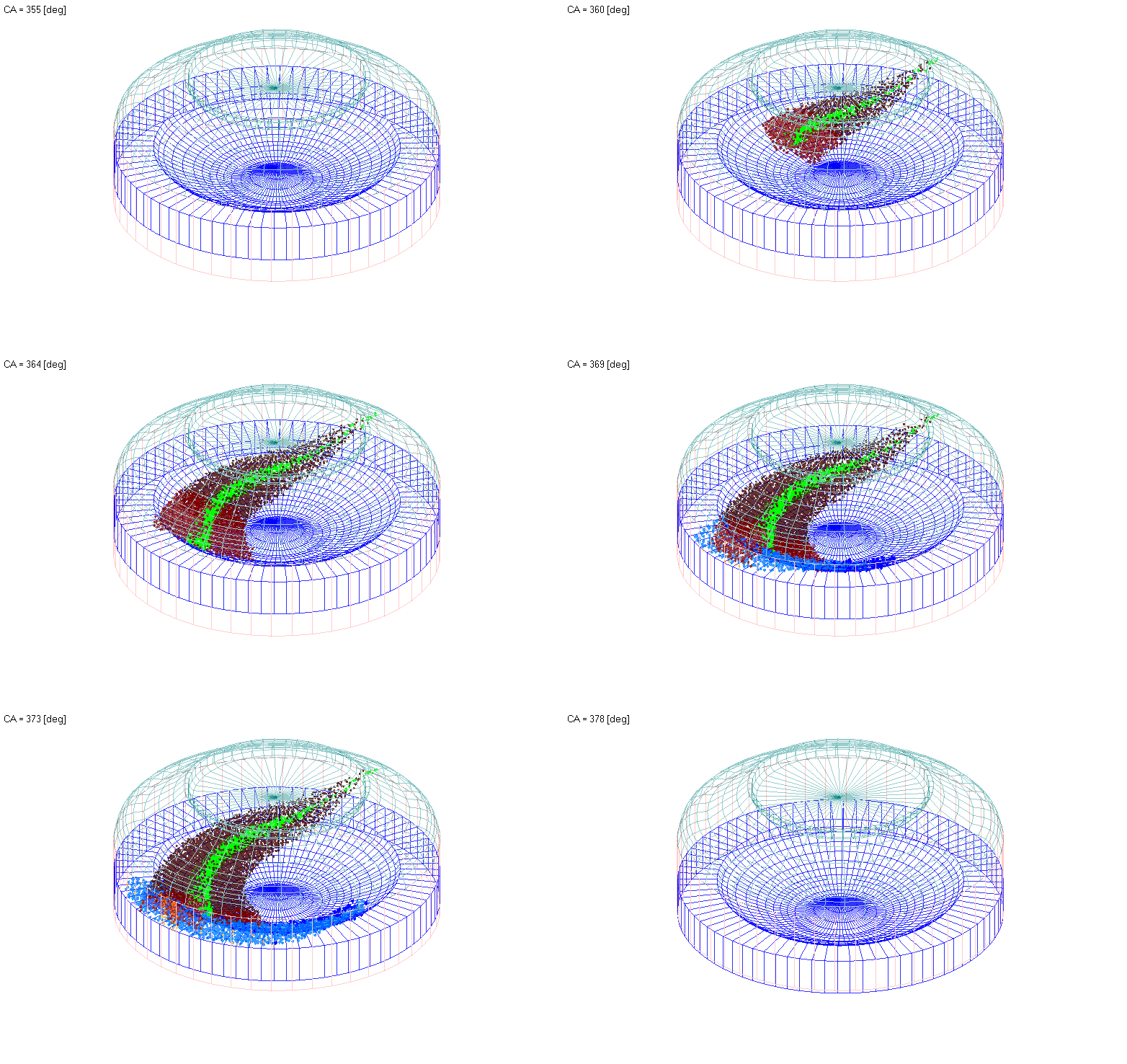
3D visualization of sprays evolution in
cylinder of two-stroke low speed large marine diesel engine
3D tool allows analyze spatial evolution as of all sprays, as
of one or few sprays. Visualization tool has capabilities to mark each
characteristic zone of every spray by specific bullets to observe the volumes
where sprays impinge walls and disturb each other in volume or near the wall.
The combustion model accounts effect of these zones on Heat Release Rate. The
real shape of piston bowl and cylinder cover is accounted at simulation and
visualization. This function is very important for optimization of
combustion in large marine two-stroke diesel engines with side injection system.
In the pictures the sprays spatial intersection zones are
shown by light green bullets.
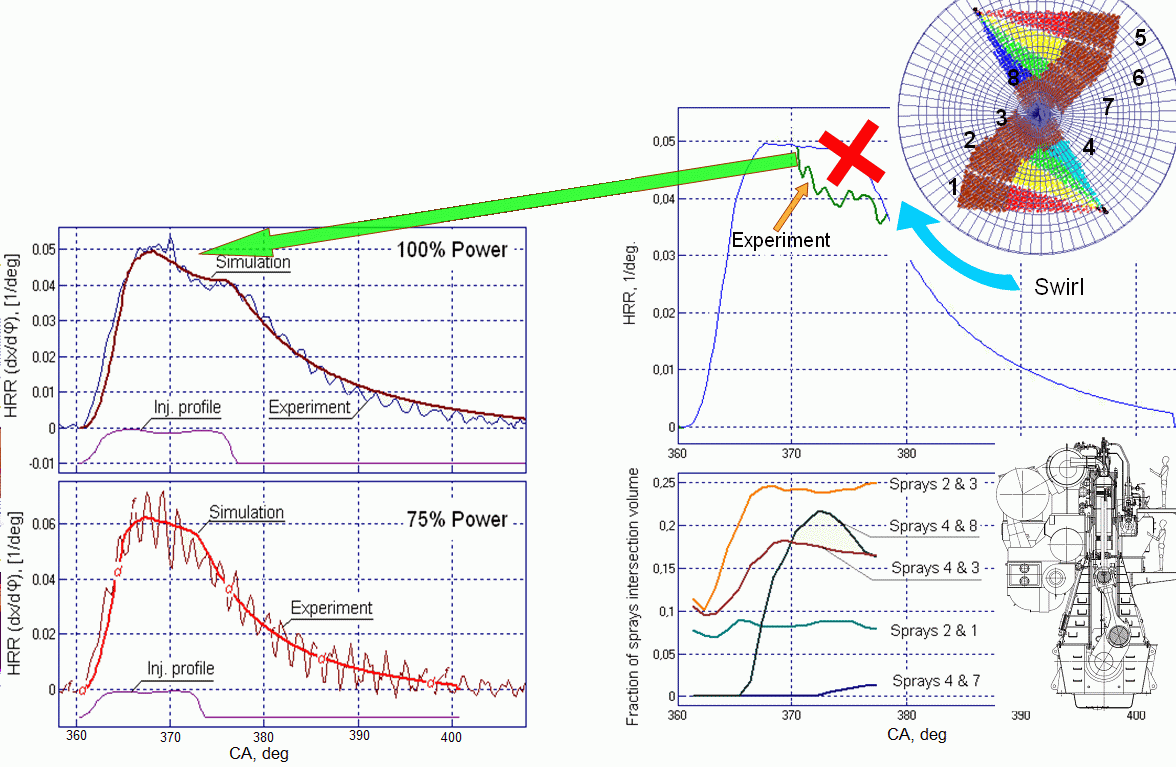
Effect of sprays spatial intersection on Heat Release Rate is
presented below. On the right HRR diagram the intersection phenomenon is not
accounted; in the left the effect is taken into consideration.
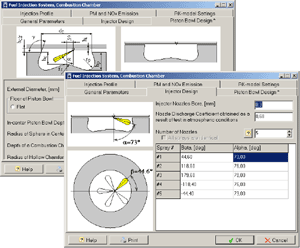 |
DIESEL-RK
preprocessor is very easy in use:
- Wizards allow beginners working without especial training;
- Detailed Engine Description provides wide range of research abilities
for experts.
Preprocessor makes it possible to set and research any piston bowl shape
and any fuel sprayer design. Data base of piston bowls is supported. |
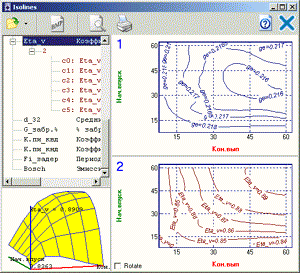
| Optimization library and parametrical
research tools. To perform an optimization calculation the
DIESEL-RK is equipped with a built-in procedure of
multiparametric and multidimensional optimization which
includes 14 methods of nonlinear optimization search. There is also a
possibility to perform 1D and 2D parametrical search investigations.
Optimization tools allow engineers to considerable increase the efficiency
of computational research providing effective ways to improve the engine
design.
For simultaneous optimization of few engine parameters: NOx, Soot and SFC
the target function including list of engine parameters may be calculated
with User Defined Procedure being done as DLL and linked to the existing
DIESEL-RK kernel.
Pareto-optimization is possible if DIESEL-RK will be run
under control of external optimizer. |
 |
SAE
Pap. No 2009-01-1956 |
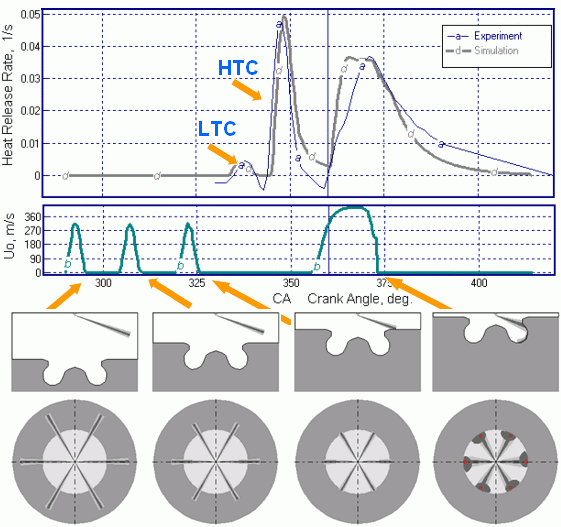
Premixed Charge Compression Ignition (PCCI) analysis.
Simulation of combustion at
Multiple Injection and simulation of the PCCI or Split Combustion
are supported. The specific feature of PCCI is a very early start of
multiple injections of pilot portions of fuel.
Low Temperature Combustion and High Temperature Combustion are modelled.
The Ignition Delay for every portion may be calculated using
different methods including user defined model, phenomenological models, or
Detail Chemistry Models, for example implemented Lawrence Livermore National
Laboratory mechanism which considers 1540 reactions between 160 species.
See detailes...
The DIESEL-RK interface includes special tool for multiple injection
specification. Using this tool it is possible to select and optimize
automatically a duration and fraction of pilots to exclude the hitting of
the fuel on the liner and to arrange optimal combustion . See
visualization. |
|
Simulation and
analysis of Bio-fueled diesel engines and Gas engines
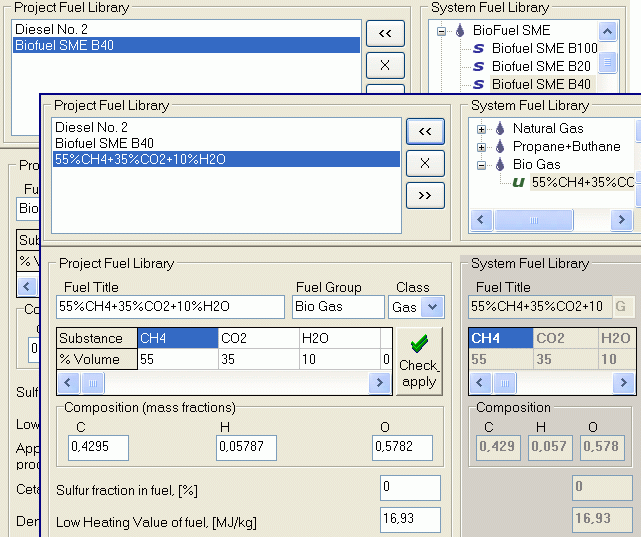
The DIESEL-RK
combustion model supports the library of different fuels including different
blends of biofuels with diesel oil.
Physical properties of biofuel blends are used in the spray evolution
simulations and in modeling the evaporation and combustion processes.
The biofuel combustion modeling was done in collaboration with Dr. Khamid
Mahkamov in the
School of Engineering at Durham University (UK).
User-Defined Fuels properties are saved in internal data base of the
project. Different types of fuels can be specified for a certain mode of
engine’s operation. |
 |
|
Properties of gas mixture of gas fueled engine are calculated
automatically depending on different gas fractions in the mixture. List of
supported gases includes 12 items and may be extended easily.
|
H2
O2
N2
H2O
CO2
CH4
CO
|
Hydrogen
Oxygen
Nitrogen
Water Vapor
Carbon Dioxide
Methane
Carbon Monoxide |
C2H6
C3H8
C4H10
CH3OH
CH3-O-CH3
C2H5OH
|
Ethane
Propane
Buthane
Methanol
Dimethyl Ether (DME)
Ethanol |
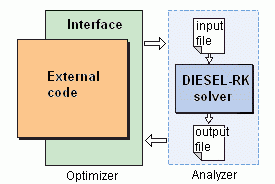 |
Kernel can be run under a control of external
application. In order to run DIESEL-RK kernel under the control of external codes
intended for optimization or for simulation of vehicle where the engine has
been used, the special interface is developed. The interface includes text
files with input data and output data. The DIESEL-RK solver may be run by
external code via batch file.
For example DIESEL-RK is compatible with multi-objective optimization
software IOSO NM |
|
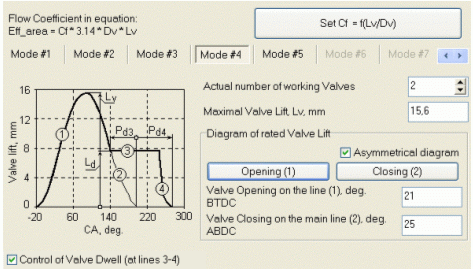
Variable Valve Actuation analysis.
Valve Lift Diagram with
variable valve actuation can be setup and optimized individually for every
operating mode.
The Valve Dwell optimization takes also into account the duration and valve
lift of the dwell |
 |
 |
Advanced Ignition delay prediction model
The classical equations intended
for Ignition Delay prediction do not work properly at modeling PCCI
and under other conditions characterizing large EGR, small temperature, long
period of the delay, etc.
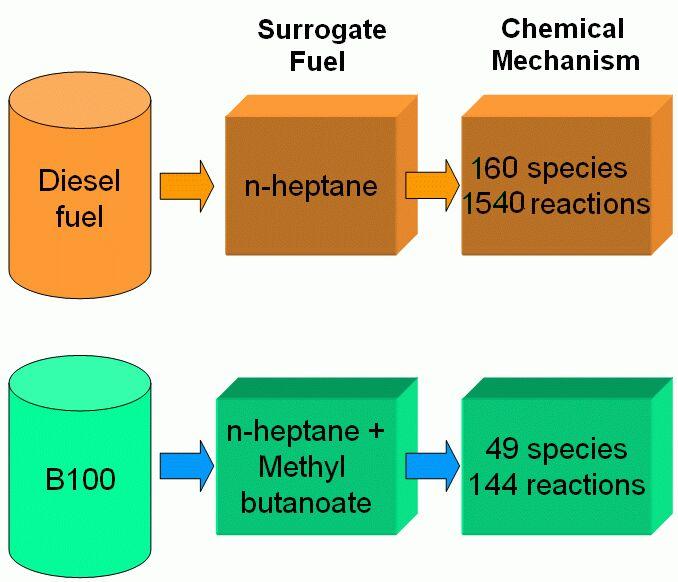
The Detail Chemistry is modeled for these cases, and
Ignition delay is calculated as a function of pressure history, temperature
history, EGR history and current Air/Fuel ratio for diesel fuel as well for
bio-fuel. The Lawrence Livermore National Laboratory mechanism which
considers 1540 reactions between 160 species is used.
A User Defined Model may be used for ignition delay
prediction. There is ability to link User Model DLL with DIESEL-RK
SAE Pap. No. 2010-01-1960 |
|
Simulation of engines with few Fuel Injection systems
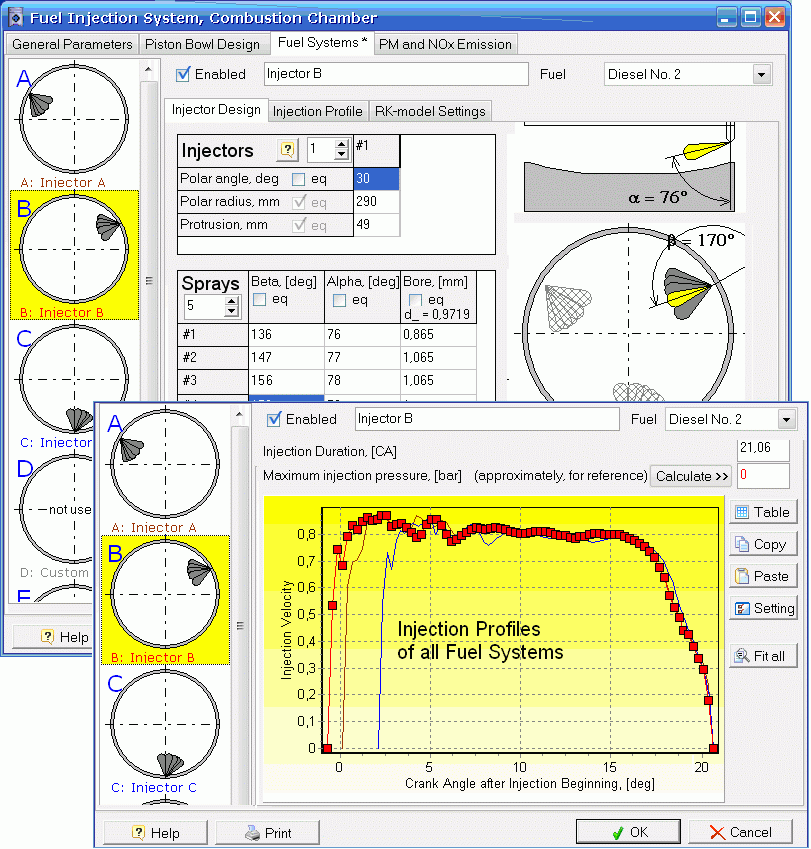
DIESEL-RK supports simulation of an engine having up to 5
independent fuel injection systems (marked as A, B, C, D, E). Every system
may have own configuration with own number of injectors, mounted in
different places of the cylinder. Each injector may have few nozzles with
individual orientation in both planes and different diameters. Each
fuel system may have own cycle fuel mass and own injection profile. So the
Sequential Injection Profiles are supported at Heat Release simulation and
NOx simulation.
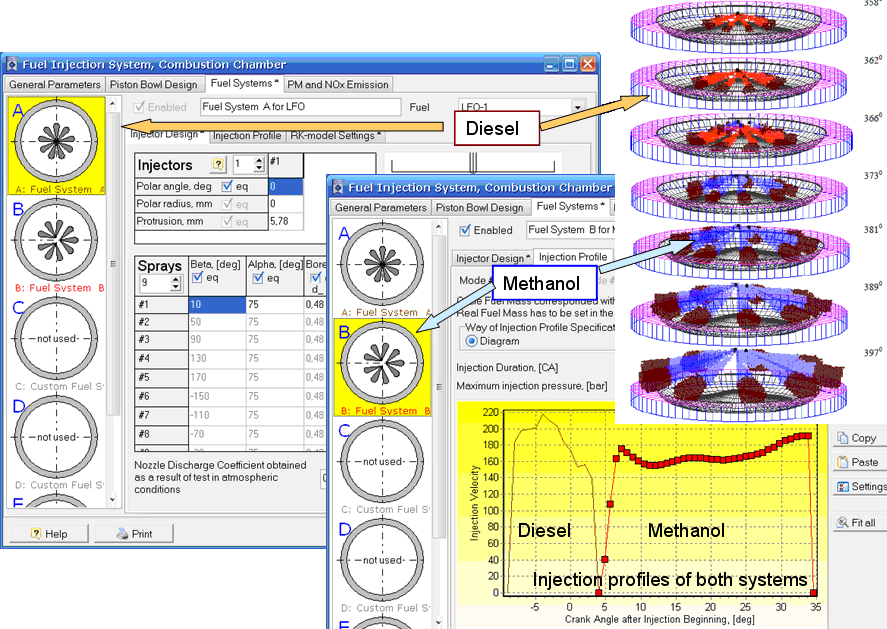
Because each system can inject own fuel the Dual Fuel
Engine simulation is supported.
|
 |
 |
Dual Fuel Engine Simulation
DIESEL-RK supports simulation of an engine having up to 5
independent fuel injection systems. One of the system may assigned as Pilot
Diesel Injection System; and another as Main Alternative Fuel Injection
System.
See details >>.
|
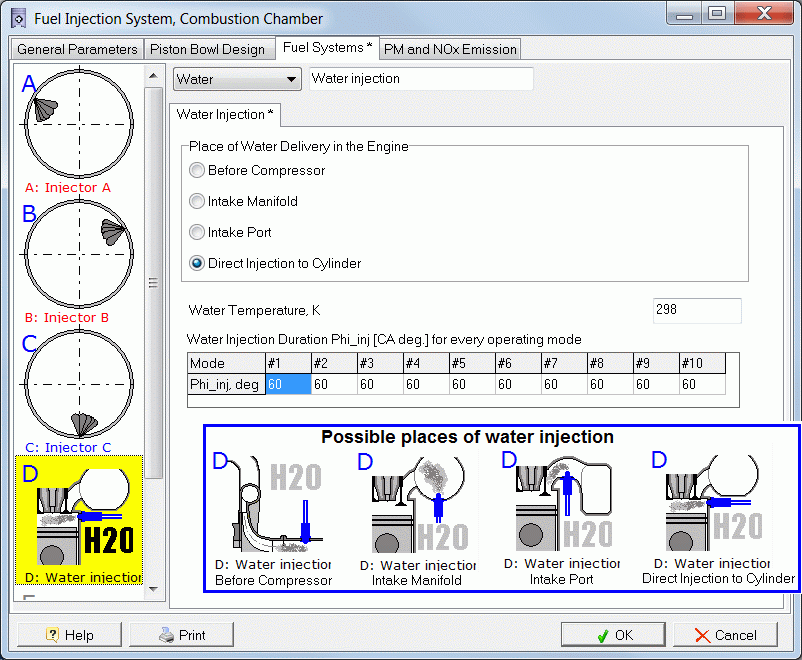
Water Injection DIESEL-RK supports simulation
of an engine having up to 5 independent fuel injection systems. One of
the system may assigned as Water Injection System (system D in the picture).
There is possibility to select place of H2O injection, cycle mass, timing
and duration of water injection. DIESEL-RK will simulate condensation and
evaporation of the water in all engine's gas flow path including cooler,
manifold, ports and cylinder. Effect of water injection is accounted in NOx
formation model which uses Detail Kinetic Mechanism. In the output data the
mass fractions of liquid water and water steam are presented as diagrams vs
CA and as integral parameters.
|
|
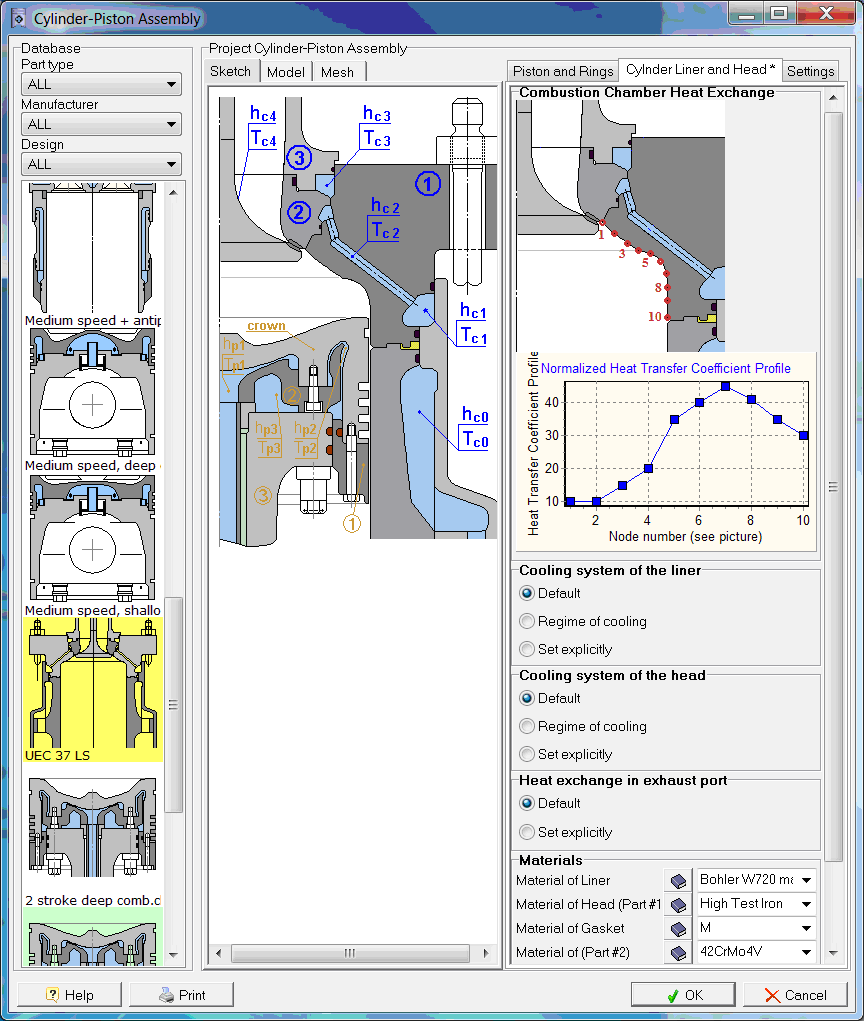 |
Coupled simulation of the mixture formation and combustion and prediction
of the thermal state of engine components.
Fuel evaporation and combustion as well as heat losses to the walls are
calculated using local wall temperatures obtained with the use of Finite Element
Model of main engine parts. Boundary conditions depend on the cooling system
design and piston ring assembly.
The program includes data base of geometry of:
- pistons,
- liners and cylinder heads;
which will be reflected by a preprocessor.
|
Being professional, the DIESEL-RK can be also used with success by beginners,
students and post-graduate students of high schools. For simplification at times
labor-intensive process of data set (especial empirical coefficients) in the
program a special tool is developed:
Wizard of New Project
Creation. This wizard on the basis of the most common data about
engine will create file of input data, using the most known technical decisions
accepted in area of propulsion engineering. Thus it is becomes simpler not only
a process of input data entering but also the most difficult stage of
computational research: calibration of engine models. The last is especially
important for the engineers who are not having enough time and experimental data
for customizing of the program on object of research, and also for researchers
who makes express engine analysis.
Skilled expert can use all abilities of advanced simulation methods of the
DIESEL-RK software by calibrating models with coefficients obtained on
experimental data.
Calculated curves can be exported via clipboard into external
applications (Excel, etc.).
Calculation of NOx emission is carried out by two ways. User can select NO formation model
from the list:
- Zeldovich's mechanism taking into account
a chemical equilibrium of 18 species may be used for conventional diesels.
- Detail Kinetic Mechanism (DKM)
or correct prediction of NO emission in engine with large EGR, multiple
injection and HCCI (199 reactions, 33 species). DKM is supported by the local
release of DIESEL-RK.
In the local version of the software the User Defined Models may be
implemented for:
- Friction losses simulation;
- Ignition Delay simulation;
- Forming and calculation of a Target Function for optimization Complex of
emission (NOx, Soot or PM and SFC).
Users Defined Models have to be developed by user as DLLs. Examples of
FORTRAN sources are presented in the distributive kit.
To make the DIESEL-RK be accessible to users, the remote
access via INTERNET is provided. For remote access
to the program it is enough to download file with
SETUP.EXE and to install client software on local computer.
List of input engine data
can be downloaded here.










|